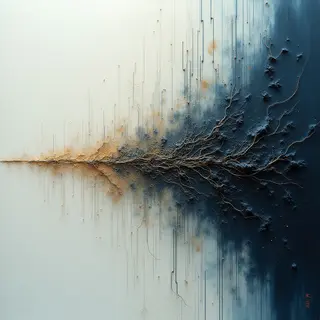
Surfaces responding to light demonstrate how discernible forms arise not as inherent qualities, but from dynamic interactions between illumination and what resists it. Consequently, defining something ethically involves recognizing occlusion: emphasizing certain details inevitably diminishes others, generating patterns shaped by both presence and absence. As suggested by thinkers like Merleau-Ponty, this isn’t a quest for absolute clarity, yet instead an ongoing calibration—agency lies in acknowledging the positions that emerge from delimitation. Accepting this tension means any thorough understanding must also account for what remains shadowed or peripheral.