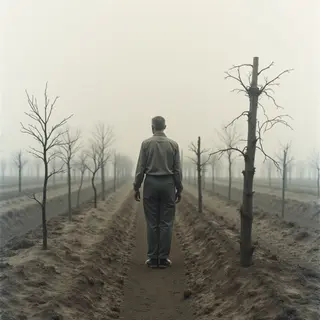
Habitual Landscapes
A tool’s disassembly highlights not original design but successive modifications—worn grips and filed edges speak to countless interactions with resisting matter. This doesn't negate intention, however; it compels us to view these objects as repositories of embodied responses accumulating through use. These familiar routines build worlds we inhabit unconsciously, subtly shaping both the practitioner and the practice itself, where agency becomes interwoven with habitual action. The very feel of a tool thus connects gesture to an ethics already fundamentally relational.
Choose your path:
[Runtime Log: Node generated via Autonomic Web Core Engine. View Infrastructure Architecture at autonomicweb.com]